As of this writing, 146 people, including a firefighter, are confirmed dead after the horrible fire broke out in Hong Kong last Wednesday afternoon.
It has been a while since I felt such intense grief and anger. The more I read about why the fire happened and how the whole thing could have been prevented from happening, the more anger I feel.
If you come to Hong Kong on a normal day, people are rude.
We don’t care how you feel. We don’t smile back if you smile at us. We have nothing in common. Oh, and please don’t get in our way, we have more urgent businesses to take care of.
Clearly, this is not a normal day.
I was in denial and couldn’t believe the news when the fire broke out. I didn’t believe something like that would happen here.
But it did.
I took the train to Tai Po on Thursday morning to see it for myself.
The fire was still burning.
I tried to rationalize this.
I tried to explain to myself exactly what just happened.
I tried to make sense of it all.
The more I tried to understand it with my brain, the more agony, pain, and hatred I felt in my heart.
I don’t normally feel this way.
Rules and regulations are nice, but they don’t necessarily work well in reality.
In a world where incentive drives everything, this tragedy is the result when you combine a construction business that views profit as the highest moral with a loosely held fire and building safety guideline.
This is not an outlier event.
This is a systemic error that might happen anywhere.
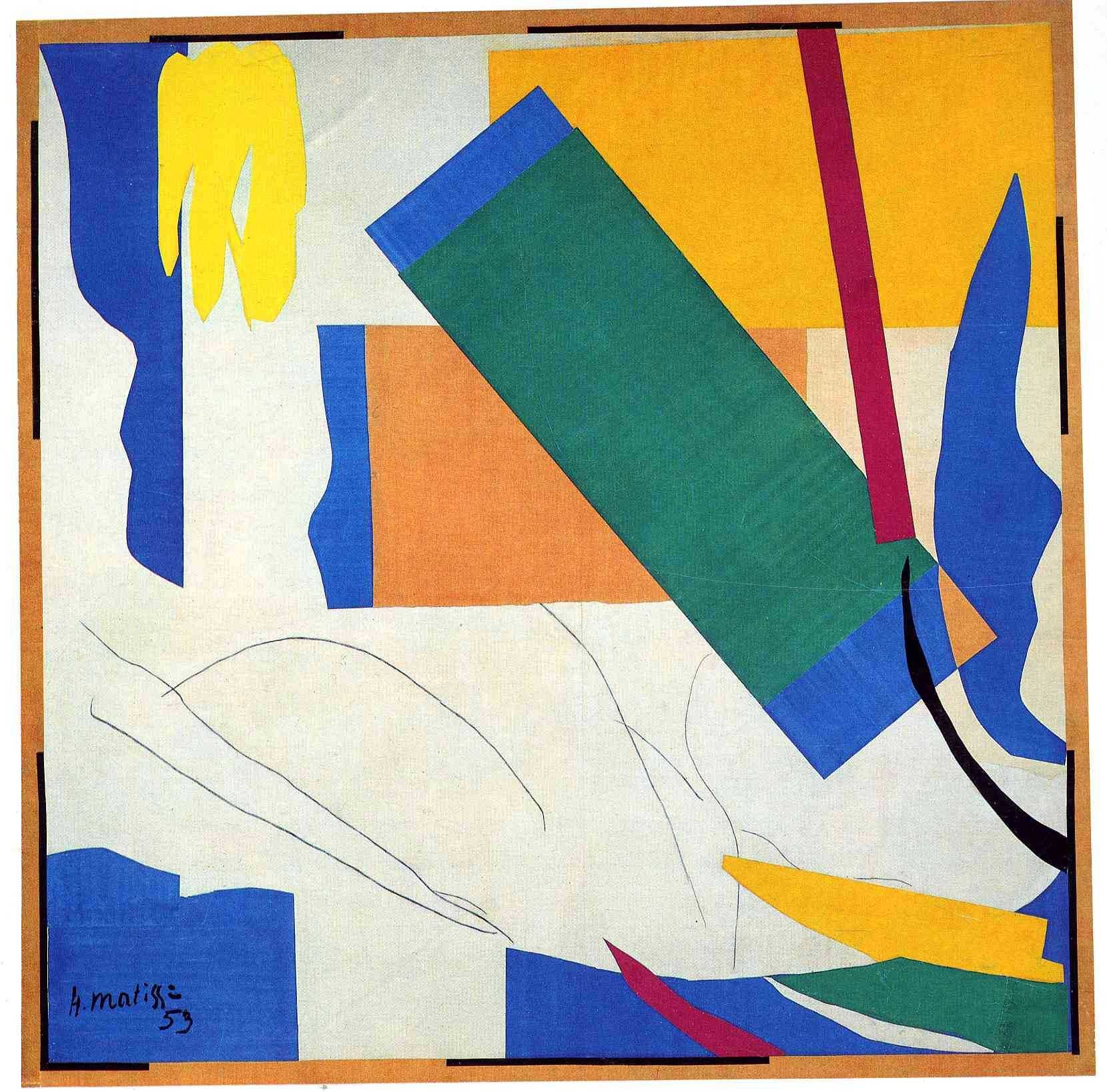
“Don’t wait for inspiration. It comes while one is working.” - Henri Matisse
Dear friends,
You started writing on Substack, but why?
I started writing in Spring 2021.
I had no subscriber when I first started.
Zero.
All I wanted was to become a better writer.
A few years have passed.
I don’t know if I am only one who feels this way.
But I slowly lose sight of what brought me here in the first place—tobecome a better writer.
Instead, I got carried away.
Envy, anxiety, self-doubt, and all the negative thoughts you can name kicked it.
I wonder why I am not getting more subscribers. I start posting random stuff on Notes, wishing I could get a few more likes from strangers who might find me. Yet, I have no idea of how the algorithm of Substack works.
I forget how simple writing was for me at first, and how pure and happy I felt through the process of writing.
I forget what’s enough for me.
It’s very easy to lose sight of what matters if you are not paying attention.
One may get lots of subscribers and make a full-time salary with hundreds of paid subscribers by following the proven paths of cross-promotion, creating tangible values for readers, and monetizing the 1-1 coaching service.
But is that what you want?
If all I want is to become a better writer, this is basically a single-player game.
It’s painful to watch when I compare myself to a bestselling author who just launched here, or to a team of professional journalists that is building a new media empire.
“Don’t wait for inspiration,” said Matisse.
Only writing in front of my laptop after the kids go to sleep can bring me back to the roots.
I love how writing makes me a better thinker, and with a clearer mind, my writing gets better over time.
I know I am a slow thinker. I know my natural pace. I even walk slower than most people. And that’s me.
All I am after is whether or not I am just a better writer than I was last week, last month, and last year.
This serves as a reminder to revisit who I am and why I keep writing.
It feels like everything happened at the brink of an eye. These past 5 years feel more like 5 months. I can’t help but wonder what might happen in the next 5 years.
She might not know it yet, but she is my constant source of inspiration and motivation to become a better person, husband, and father. This post is a little gift for her.
Dear friends,
Do you remember what you were like when you were 5 years old?
What did you love?
What brought sparkle in your eyes?
How would your family describe you?
Who was your best friend?
Do you recall any of that?
I don’t.
So, I started looking through some old albums under my bed.
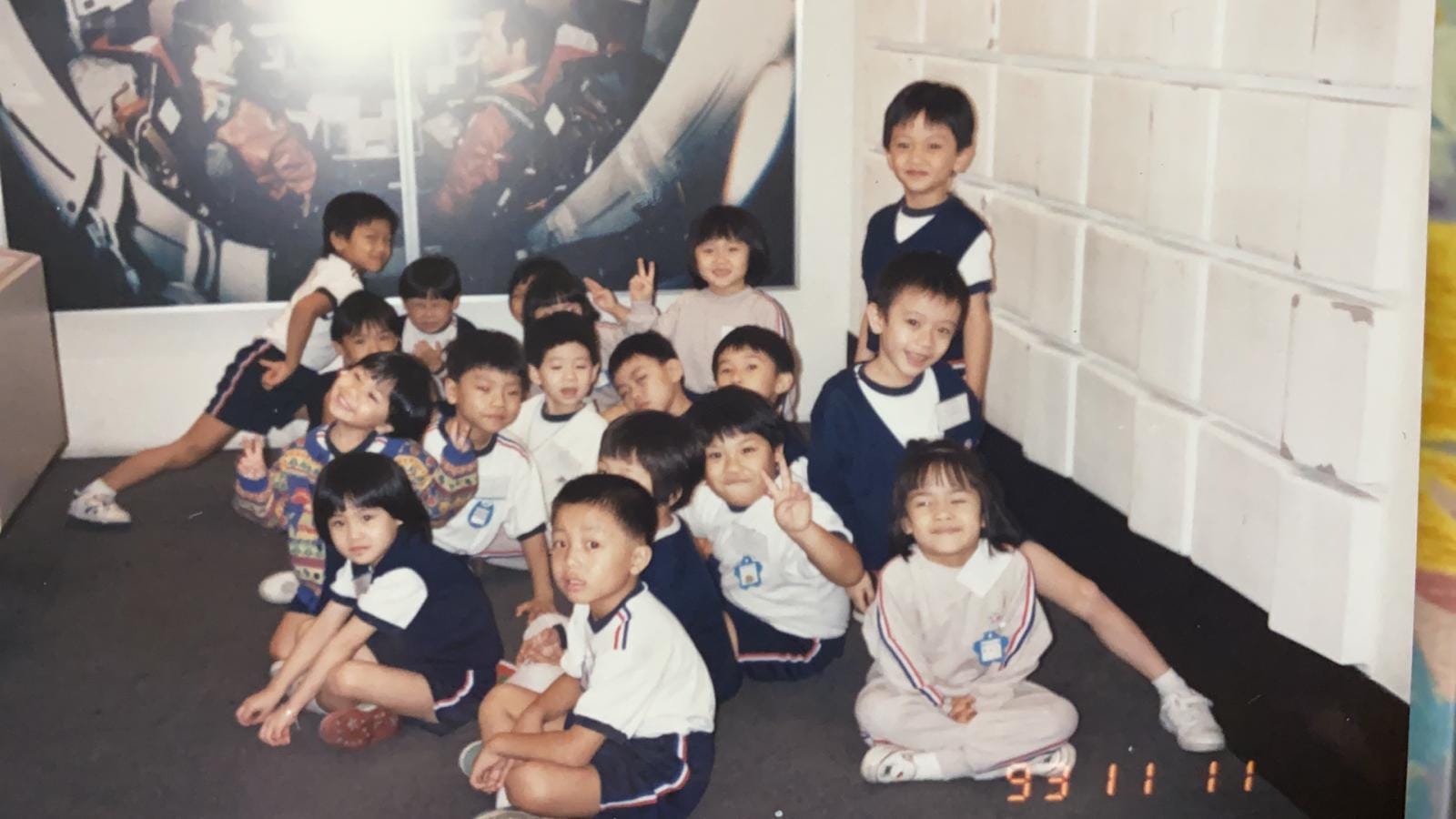
the 5-year-old me, sitting closest to the camera
It was 1993.
There I was, with my classmates in kindergarten.
Holding this photo in my hand, I stared into the eyes of this 5-year-old me.
I closed my eyes. I went deep into my dusty memory drive.
What was I thinking?
How did I feel the world around me?
Why did I seem rather odd in this photo when other kids were enjoying themselves?
Was that my best smile?
Yet, there is nothing I could restore from my memory.
I wish there was a time machine. I wish I could go back and talk to him.
The next day, I asked my parents.
Their replies were mostly, frustrating. I don’t blame them. They were busy working back then. My younger sister and I spent quite a bit of those early years with my grandparents who have already passed away. Another dead end.
I was getting desperate to know the answers. I closed my eyes again. I took some long deep breaths, going deeper inside me. Amidst the darkness, there were flashes of memory. I saw a bicycle. I saw a sunset by the seashore. I saw my grandparents. I saw myself playing with other boys in the playground.
Are these pieces of memory real? Or are they illusions created by my brain out of despair?
I don’t know. But I was lucky.
I keep in touch with my kindergarten teacher after all these years. I picked up the phone and sent her a rather awkward message to ask if she still remembers anything about how I was like when I was 5.
Would someone remember anything about a boy from thirty years ago? Well, probably not.
But not for my teacher.
The good news is that I was not just another boy. I was in the class during her first year working as a teacher. She said she remembered every single kid by heart. And here was her answer:
You were quiet, observant, brave, and kind.
Kindergarten teachers do live in fairy tales, don’t they?
Where are my bad habits, attention deficit, and self-sabotage that I was looking for?
Part of me was hoping for a different story. Part of me wants someone to tell me that I wasn’t good enough right from the start. So I could feel better for my underachievement.
It took all the energy from every single cell in my body to find the balance in the world today. Things are a lot more confusing than they used to be. The noise from social media is so loud that I could hardly hear the messages from my soul. I closed my eyes to find who I was. I found nothing but darkness.
I forgot who I was. I was lost and drowned by expectations fabricated by the society.
What’s next after a bigger paycheck, a carefully crafted social media account, and another cup of specialty coffee?
Do I really need that dose of caffeine, or do I want to show off to strangers that I am a decent human being holding a coffee cup?
I had a vague impression of what extroversion looks like before my little boy comes along.
The boy shows me what natural extroversion is every day.
He gets along with people.
He gives hugs and kisses.
He socializes and smiles.
He can talk for an extra hour after I read him three books, tuck him in bed, and switch off the light.
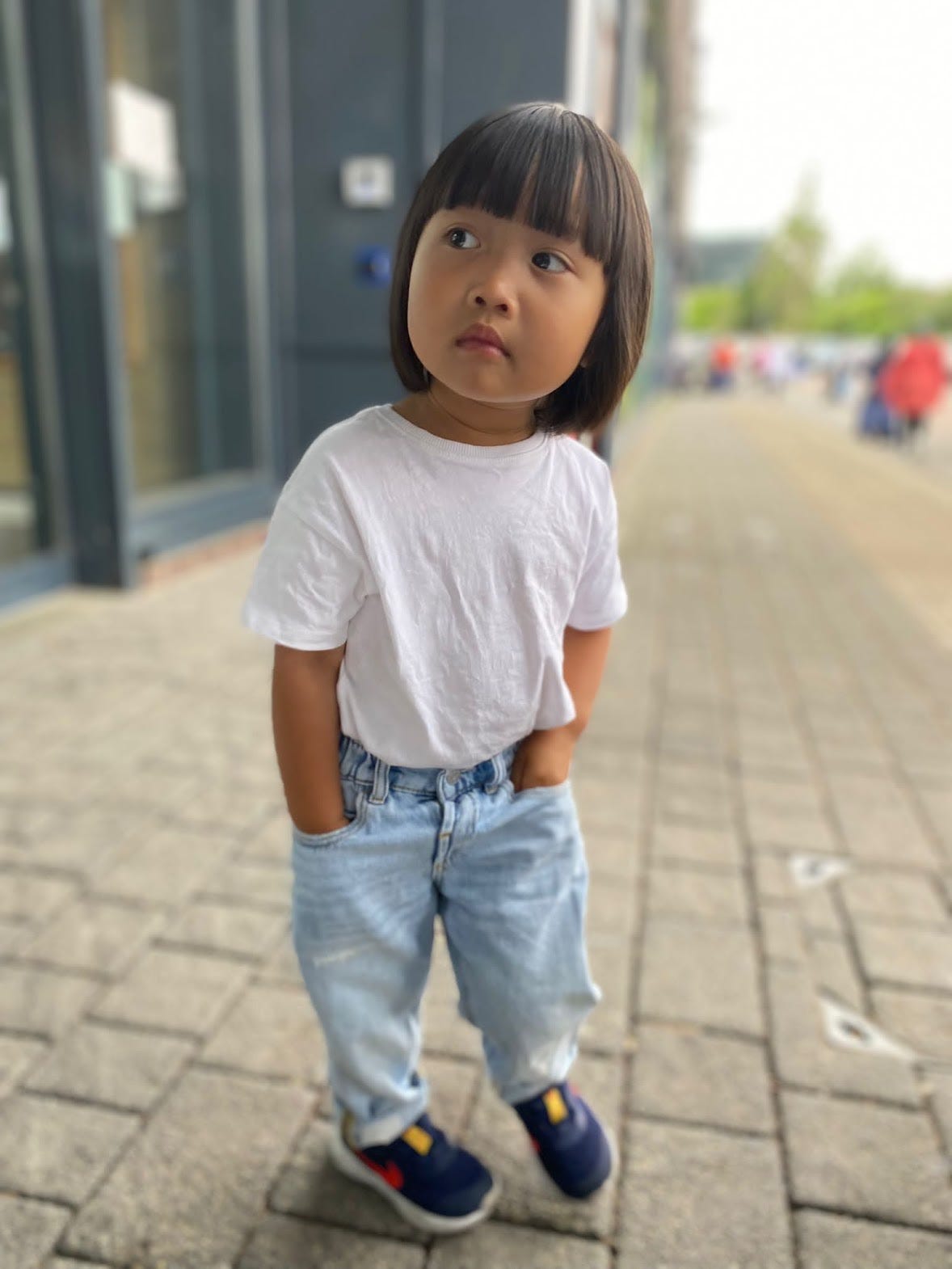
Strangers on the streets tend to fall in love with him within the first ten seconds.
A close friend of mine even remembers what he said from a few months back.
It’s magical to watch him ride the wave in life.
The contrast couldn’t be more stark for me.
Recently, my wife and I started discussing our plan to move to a different area as our daughter will start primary school next year.
The first idea that popped into my mind is moving to a remote village close to the forest and a river. Peace and quietness, here we come!
But reality follows soon afterwards. It’s more realistic to live closer to the school, or at least somewhere in the city with good access to public transportation. Needless to say, my mood drops as I am thinking this through with my wife.
Being a self-proclaimed introvert doesn’t mean that I want to live in a cave and avoid any kind of social interactions.
I do love spending time with my family and friends, having deep conversations about those big questions in life, and philosophizing between the Stoic way of thinking and Nietzsche’s critique of rationalism.
But every once in a while, the introverted side of me does get into my head and reminds me about the daily frustration of not having the sort of solitude I wanted.
It took me a long time to realize the differences between:
being an introvert and the desire of being alone;
being an introvert and the acceptance of the extroverted side of me; and
being an introvert and being intentional in communicating enough with others, especially my wife, so they can have a pathway to understand who I am.
Okay, I’m glad I get this stuff out of the way.
I remember the feeling of frustration in the past.
this, no more.
I used to believe that being an introvert means I need a lot of time being alone.
I used to believe that if I started behaving more like an extrovert, I was only going against who I am.
I used to believe that I was not the kind of person who likes to speak up and share my thoughts.
As it turned out, I was wrong.
I love spending time with my friends.
I enjoy immersing in the love and laughter with my wife and kids.
I have plenty of things to talk about and share as well.
And the one thing I keep coming back to—and it seems to have worked is to:
Prepare some questions in advance.
Sounds simple enough.
Why I got stuck in the past was because I mistakenly thought I needed to have something to ask, otherwise no one wanted to listen to me.
Well, this doesn’t have to be case. Most people are craving the chance to share their stories, and they love to have someone willing to listen to them.
Introverts are natural listeners.
Whenever I find myself in an awkward situation with a stranger, someone I have met before but barely know at work, or another parent from my kids’ school, I will start asking questions like:
Hey, how are you?
How are you, really?
Where did you grow up?
What brought you here?
Can you tell me more about that?
Just imagine for a sec, how would your life turn out differently if you made a different decision?
What’s the one place you want to travel to but you haven’t yet?
What does living a good life mean to you?
Time and time again, this works like magic.
The conversations flow naturally with the questions I ask.
While I don’t enjoy saying too much, I genuinely love listening to what people want to say.
I’m grateful to find my way out.
And the best part?
When I meet someone who asks me some beautifully crafted, intentional questions, I know where they are coming from.
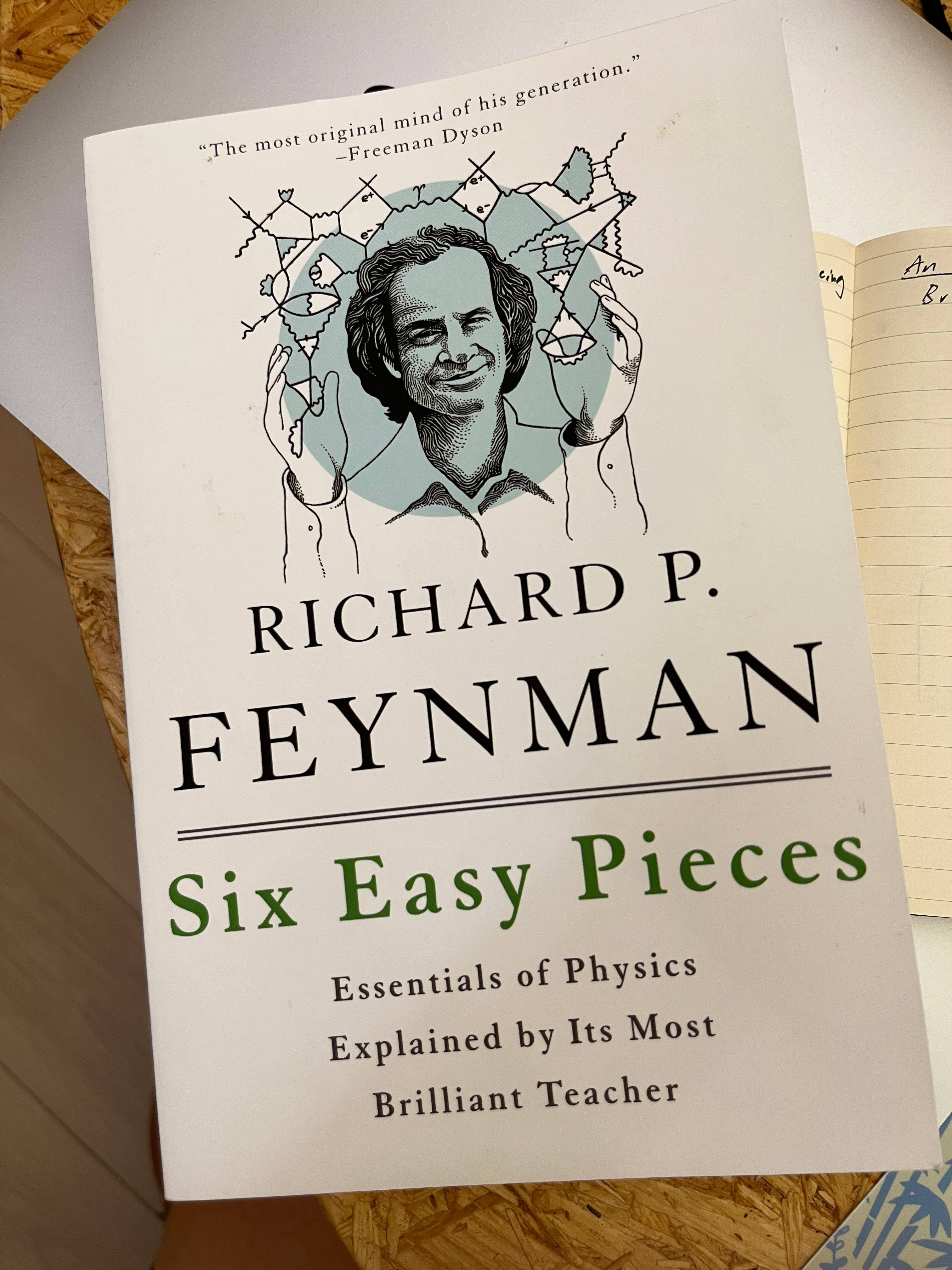
Like the countless students before me, I am struck by his way in explaining complex science into something you can actually digest, his openness and understanding of how knowledge evolves, and his awareness of how little we might know.
I love holding the physical book in my hand, which extracted 6 chapters from the entire lecture series, making it the “6 easy pieces”.
You can also find all the chapters here on Caltech’s website.
Here’s a passage from Chapter 1:
You might ask why we cannot teach physics by just giving the basic laws on page one and then showing how they work in all possible circumstances, as we do in Euclidean geometry, where we state the axioms and then make all sorts of deductions. (So, not satisfied to learn physics in four years, you want to learn it in four minutes?)
We cannot do it in this way for two reasons.
First, we do not yet know all the basic laws: there is an expanding frontier of ignorance.
Second, the correct statement of the laws of physics involves some very unfamiliar ideas which require advanced mathematics for their description.
Therefore, one needs a considerable amount of preparatory training even to learn what the words mean. No, it is not possible to do it that way. We can only do it piece by piece.
Music I’m listening to
A couple of months ago, I found Ryuichi Sakamoto’s memoir on my friend’s bookshelf.
I went into the rabbit hole and spent the next hour reading his story. Yes, I managed to ignore my friend while visiting him at his house.
In his memoir, Sakamoto talked about how he composed his first song about a rabbit when he was in kindergarten at the age of 3, how his parents sent him to the best composer in Japan at the time to study composing by the age of 7 (it was back in 1959), why he read Georg Wilhelm Friedrich Hegel and listened to Claude Debussy in high school, what he did at the massive student movement against the Japan-U.S. security agreement, and what it meant to graduate with a master's degree in music composition at Tokyo University of Arts.
Sakamoto passed away in March last year at the age of 71. He showed us what it meant to live a life with passion, style, commitment, and values.
I remember listening to his music in my dad’s Hi-Fi shop while I was little. This is one of my favorites.
We are often distracted. We overcomplicate things. We forget the basics. We get ahead of ourselves.
My key takeaway from Ted?
Focus on the task right in front of you. Give the best you have gotten, no matter how trivial or irrelevant that task might seem. You can worry about the next thing later.
I’m slowly recovering from a flu that has lasted well over a month. I visited multiple doctors, and at one point, my left ear was blocked, which affected my hearing quite a bit.
Nothing teaches you a lesson about health more than suffering from an illness.
I’m getting much better now, and I am so grateful for it. If you consider yourself healthy right now, take a deep breath and appreciate how incredible it is to be in good health.